Hi, I'm Ji Hae

pronounced " g · hey "

Designer and Strategist

Philadelphia

My design practice spans 15 years. I started in furniture design, woodworking, and art fabrication before moving into digital product, where I've spent 8+ years. The last 5 years I led design projects in patient-facing healthcare for tens of millions of members.

At Cigna-Evernorth, I influenced decisions that directly impacted how patients get their medications. Focusing on prescription ordering and benefit management tools, I owned the highest-trafficked home delivery pharmacy experience, led 0-to-1 design for Over-the-Counter shopping that introduced a new line of revenue, and clarified prior authorization, turning a process that delayed care into something patients could navigate better.

I led by influence, not title. I mentored juniors and peers, and built a storytelling framework for stakeholder reviews that became a standard others adopted.

more on how i work

My design process

I ask questions and start by getting clear on the current state to understand where we are today and where we're looking to head:

- Who's the end user?
- What's the problem?
- Why does it matter?
- What happens if it goes unsolved?
- What does success look like?


That framing usually reveals whether we're solving the right problem before I begin designing anything. I engage cross-functional partners early so the direction is inclusive and shaped by more than one point of view.

I seek out research and analysis often, alongside the perspectives I gather from partners. These inputs shape how I scope and prioritize my work, connecting opportunities across the broader ecosystem down to the specific flows and touchpoints where people actually experience them. That's where I've partnered closely with engineering to build and deliver to tens of millions of users.

How I collaborate with partners

At the end of the day, my goal is to work with partners to arrive at the best solution possible for the people we're designing and building experiences for. That's the north star.

The most common challenge I've seen across product teams isn't disagreement itself, it's that people are pushing for different interests that are often hard to communicate.

When there's disagreement, I've had the most success solving it not through more debate, but by creating dedicated spaces for relationships and organizing the discussion into visual concepts or frameworks. Collaborating this way builds trust, makes trade-offs tangible, and leads to clearer decisions. In the end we stay focused and aligned to move forward as one team.

Getting clear on scope, prioritization, and a now / next / later strategy usually gives every perspective meaning and a place, even if not all at once.

To add, sometimes the most useful thing I can do as a lead is get out of the way and trust someone else's expertise.

Why I'm drawn to Healthcare

As a caregiver, I help my retired senior parents navigate their healthcare, and too often we run into confusing, labor-intensive, and broken services. I want it to work for them.

As a designer in the industry, I've seen patients stuck in a prior authorization process during a moment they needed care most. I've also heard too many people during research sessions describe the heartache and headache of being unable to afford medication their life depended on.

- Do health services have to be this way?
- What can better healthcare look like?

These are the moments that set healthcare apart from other product work for me. The stakes are immediate and human. It's also the one space that's truly universal. My parents' experience today will be someone else's tomorrow.

My AI perspective

My relationship with AI is complicated, and I think that quality of tension is a healthy one to have. AI is also too broad to discuss in general terms, which leads me to always anchor it to specific contexts and ask questions like:

- Does AI have a place in this process?
- Does it have a place in this problem?
- If so, how, and to what end?


I'm wary of AI tools becoming an unintended default, a reflex for many to use because it's shiny and conveniently available, not because it's the right tool for the task.

I believe approaching any tool starts with the right intention, an understanding of what it's meant to do, and a readiness to own up to what it produces.

In spaces like healthcare especially, where the stakes are high and the margin for error is low, I think design thinking mindsets matter more than ever. That means staying curious, responsible, and human-centered in every decision, every step of the way.

AI moves faster and more powerfully than most tools I've worked with, so staying adaptable and informed matter too. I'm choosing everyday how I evolve alongside it rather than reacting to every twist and turn.

Where I'm a good fit

I'm a good fit in sectors like finance, government, healthcare and healthcare adjacent industries like wellness, fitness, food, and veterinary care.

I've worked across complex systems and constrained spaces that have required figuring out what was most important to solve when everything felt urgent. In healthcare, that meant designing so a delay in pharmacy care didn't leave patients to navigate it on their own.

Those experiences are what I'd bring to industries like finance and government, where policy and process shape what's possible as much as regulation does in healthcare.

I'm also drawn to spaces like wellness, fitness, food, and veterinary care, where people and families navigate decisions that shape quality of life.

What ties it all together for me is making sure a gap in the system doesn't become a burden the person has to carry alone, and never mistaking what's convenient for what's right.

bonus

Recent favorite memory

After indulging in our favorite French pastry called kouign amann during our Montreal trip, my partner and I trekked our way over to Mont Royal, a mountain located in the middle of the city.

It was a gorgeous sunny day, unlike what the weather channels had forecasted just days before.

Choosing our adventures up to the peak of the mountain, we spotted a hungry groundhog, sacrificed our water to a thirsty baby raccoon, connected with kind strangers, and eventually reached the top. Awaiting us was the prize of a breathtaking panoramic view of Montreal's cityscape.

Coming down from our high and through windy paths, we visited the grave of Leonard Cohen, one of the greatest. Then we went off to fill up on delicious French-Canadian food and wander for 25,000+ steps into more adventure. It was a day I'll remember.

A book that inspired me

'The Serviceberry' by Robin Wall Kimmerer.

It's a much shorter, easily digestible version of the earlier 'Braiding Sweetgrass', which I also enjoyed and learned from.

'The Serviceberry' has become a life-line to me as a constant reminder to keep hope, to imagine the possibility of different realities, and to remember the powerful nature of gratitude.

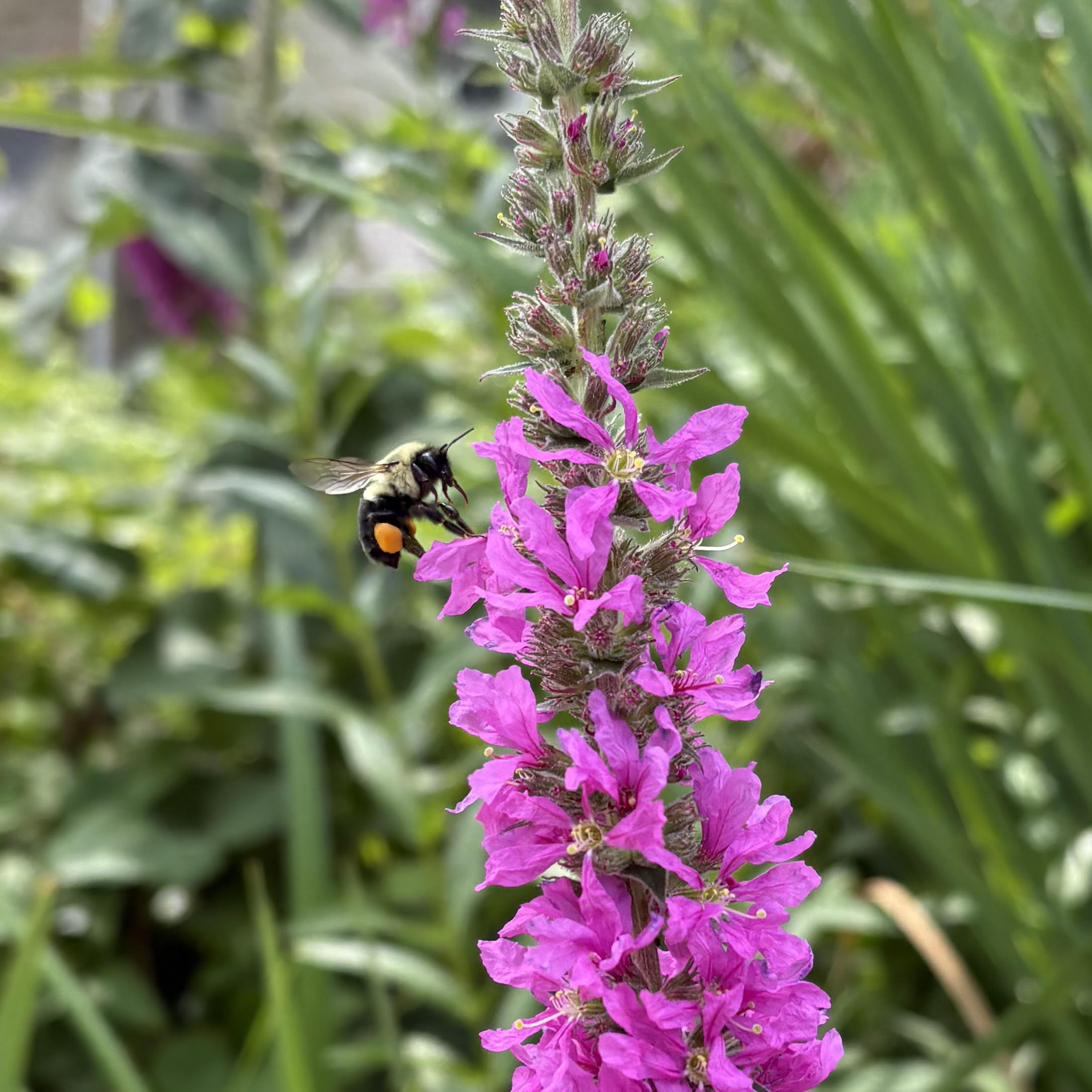
This book has inspired me to pay more attention because when I do, I'm able to witness and connect with stunning moments like this one on an ordinary day:

A furniture piece I'm proud of

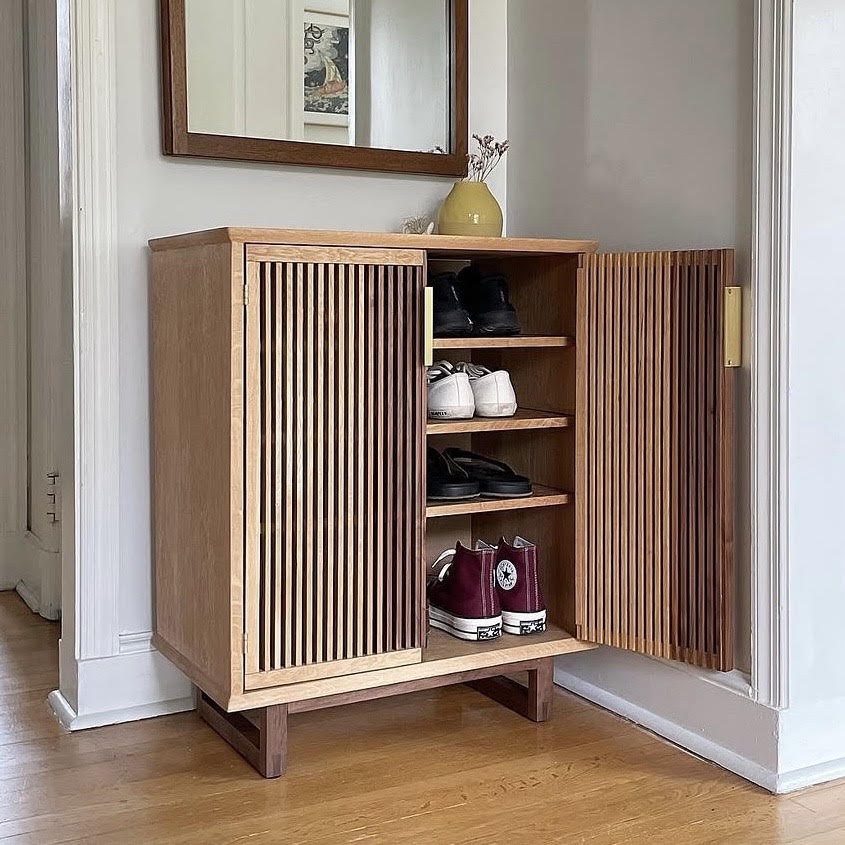
Three years ago, I made a shoe console for my family's frontdoor entryway.

At the time, we needed a solution for the variety of shoes piling up. They were creating clutter. It looked messy and became an irritation we could do something about. So, I designed and built a shoe console with three goals in mind, ensuring it was:

1. Functional. That it would serve it's purpose, allowing everyone in the household to easily use it.

2. Elegant. Because it was a piece for the front entry - the first object anyone would see stepping foot into the house - a pleasing aesthetic quality mattered to me.

3. Built to last. That it would stand the test of time, having a place in the home for a lifetime.

It makes me overjoyed seeing my family continue to actively use it today because it works, and I haven't gotten tired of looking at it.

A labor of love, this piece was handmade with locally sourced American white oak and walnut, accented with brass fixings.

Learn more about my experience, or let's discuss ways we can collaborate.